

£20 billion of benefits goes unclaimed every year. What are we doing about it?

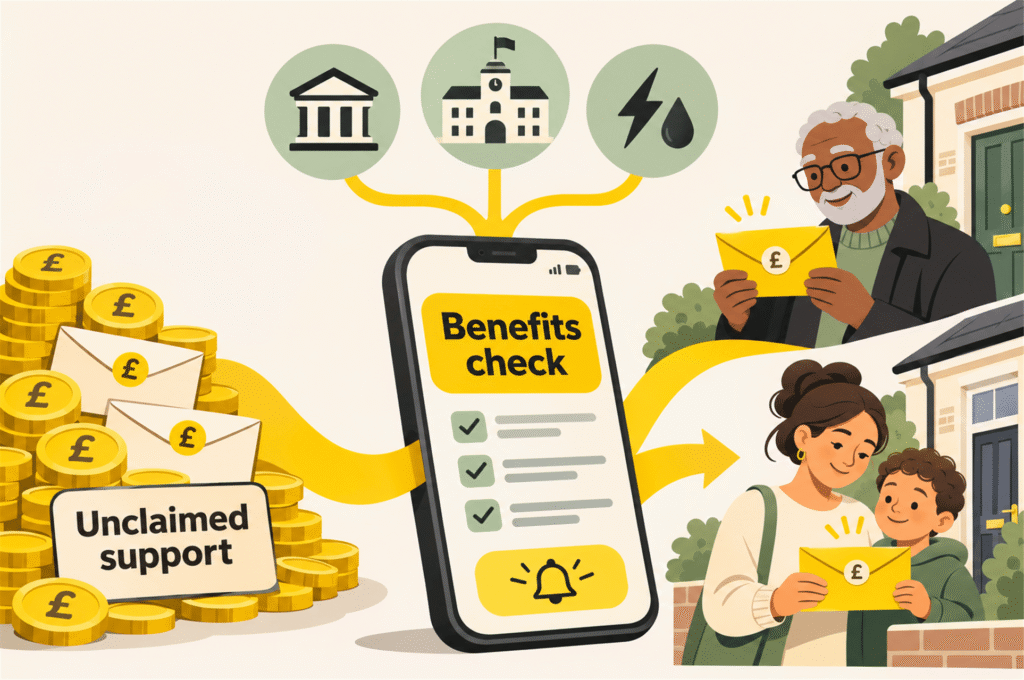
The Department for Work and Pensions (DWP) has published new figures on unclaimed benefits. Added to the official estimates for Council Tax Reduction and Child Benefit, they put the support that goes unclaimed in Great Britain at around £20 billion a year. More than 3 million families miss out on Universal Credit or Pension Credit alone, by around £4,100 a year each.

Behind those figures are households: pensioners struggling with heating bills, working families juggling rent and childcare, disabled people facing extra costs, and households already falling behind with payments. Some don’t know they are entitled to more. Others can’t get through the application, or don’t have the time or the capacity to pursue it.

The organisations people deal with every day already have the customer engagement and the data to change that. By building the benefits check into the services people already use, they are best placed to turn that entitlement into money in people’s pockets.

How much support goes unclaimed

Universal Credit accounts for more than half of the total.
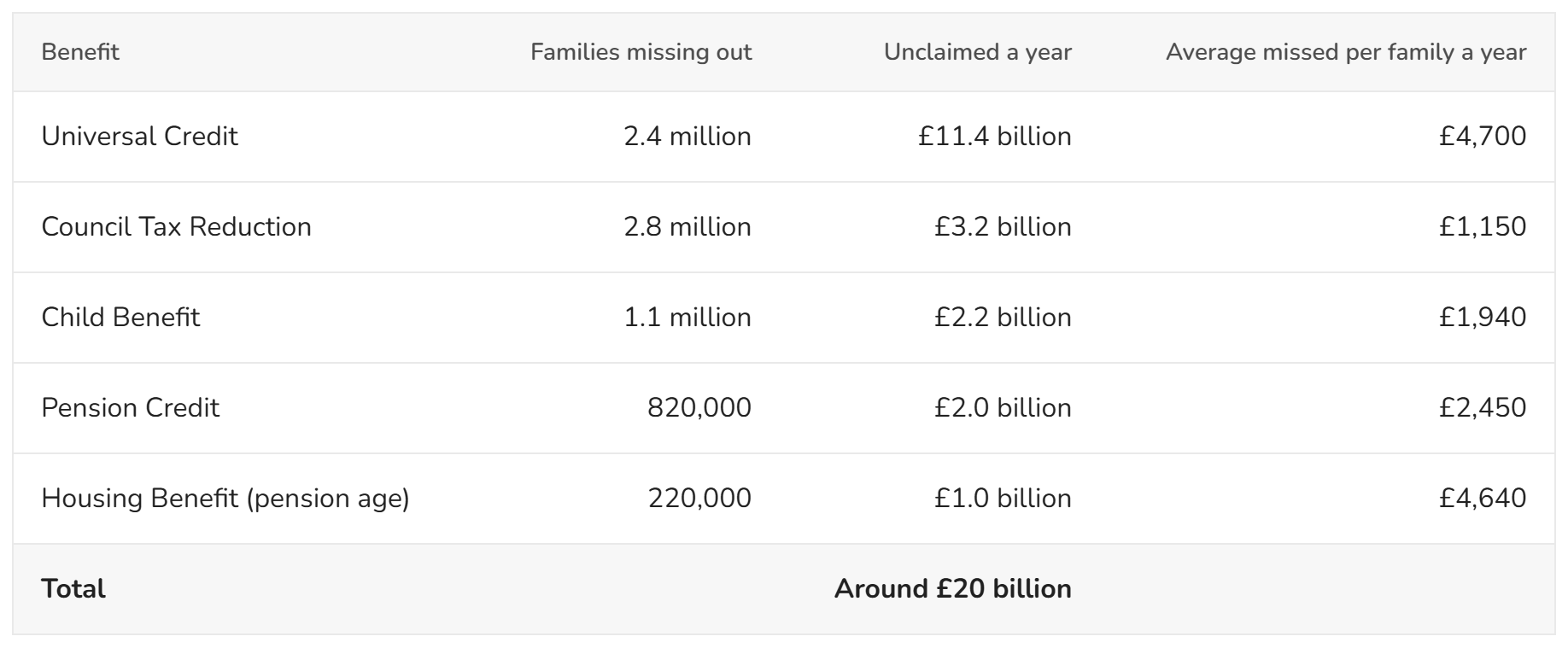
Sources: DWP and HMRC, 2024/25. Families can’t be added up, as one household can miss several benefits.

The total covers only the means-tested benefits with official take-up figures. Disability and carers’ benefits, social tariffs and local grants come on top, and our platform figures below include them.

The gap between people and pounds is telling. DWP estimates that 72% of the families entitled to Universal Credit claimed it, yet 87% of the money was claimed, so many of the people missing out are entitled to smaller awards. Those amounts still matter. An extra £30 or £50 a month can keep a bill paid or stop a household borrowing for essentials.

What our own data tells us

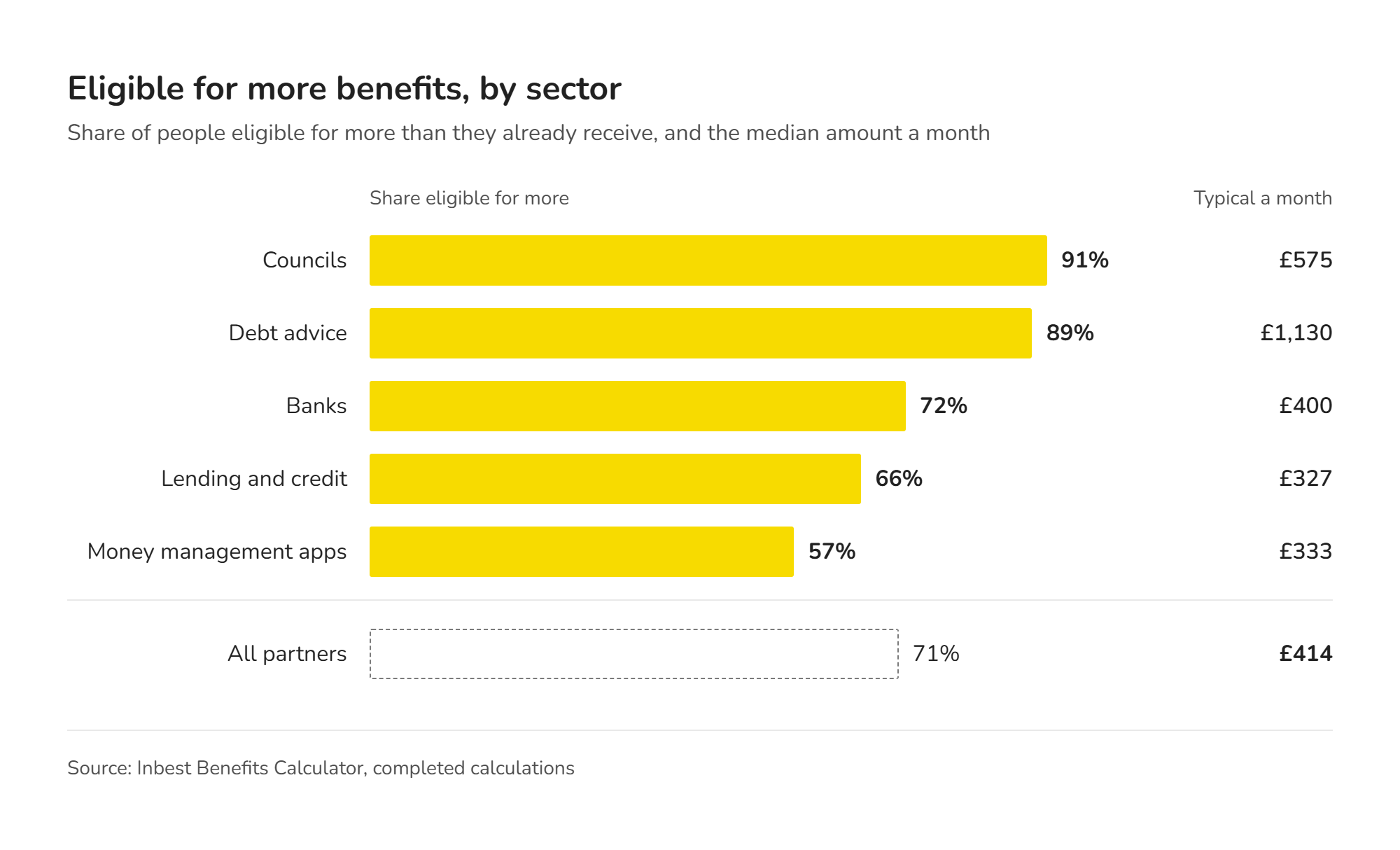
Every completed calculation on our Benefits Calculator compares what a household already receives with everything it is entitled to. 7 in 10 people who complete it are eligible for more, typically around £414 a month, or almost £5,000 a year. That is close to the £4,100 a year each family missing out on Universal Credit or Pension Credit loses on average. These are people using our platform rather than a representative sample of Great Britain.

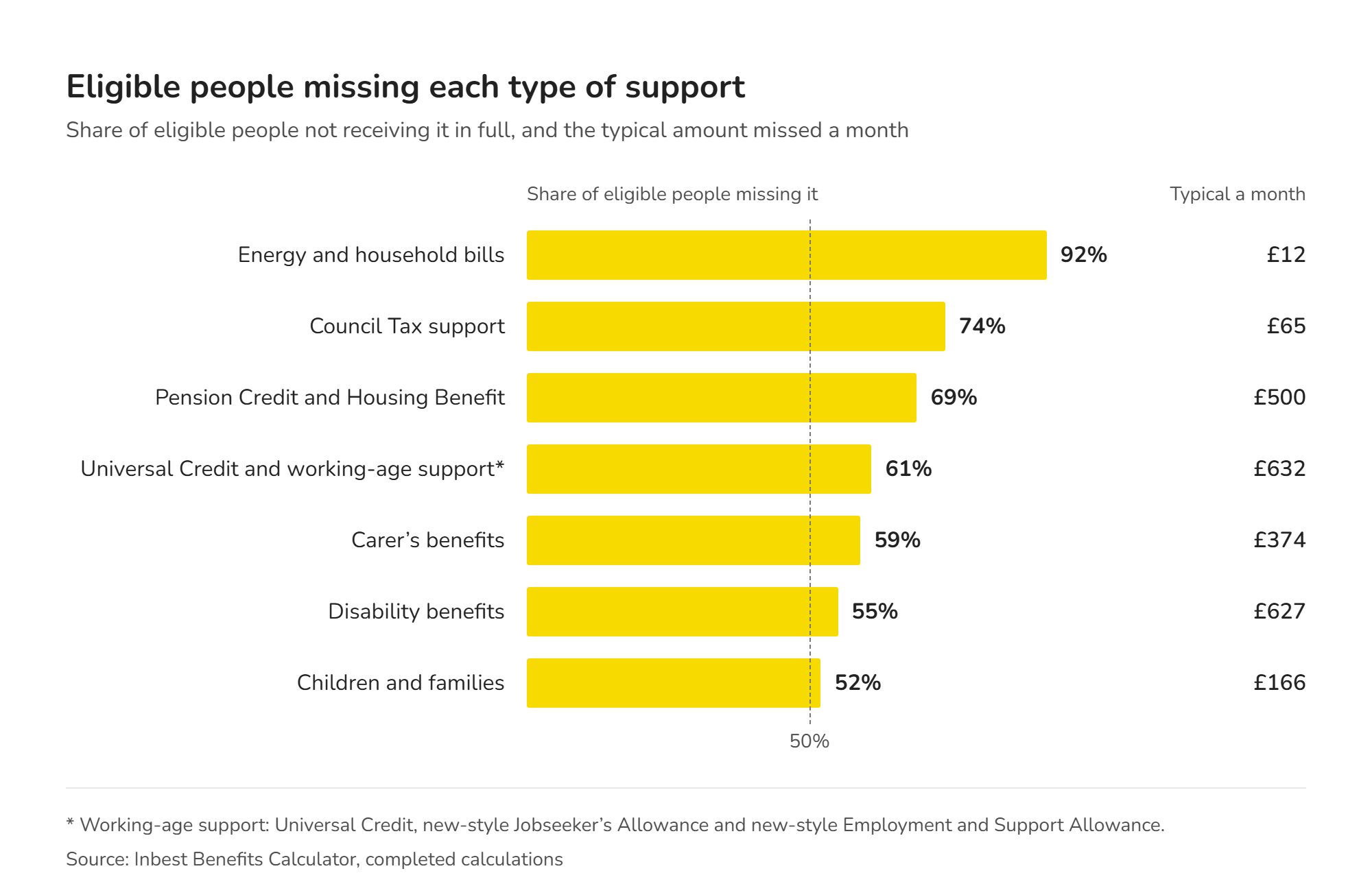
By sector, the share of people eligible for more ranges from around 6 in 10 in money management apps to 9 in 10 among people using their council’s calculator or a debt advice service. The amounts are largest among people already in financial difficulty: people who reach a debt advice service typically miss £1,130 a month.Share of people eligible for more benefits by sector, with the typical amount a month: councils 91% (£575), debt advice 89% (£1,130), banks 72% (£400), lending and credit 66% (£327), money management apps 57% (£333), all partners 71% (£414).By type of support, the most common gaps are small amounts on energy and council tax bills, and the largest are Universal Credit and disability benefits, each typically worth more than £600 a month to the people missing them.Share of eligible people missing each type of support, with the typical amount a month, from energy and household bills at 92% (£12) to children and families at 52% (£166).
Why so many people miss out

DWP’s report points to three barriers between entitlement and a claim.

  • Many people don’t realise they qualify. A common belief is that benefits are for people out of work, yet Universal Credit supports many working households, and people can get help with council tax, housing, disability or caring in a wide range of circumstances. Only 60% of couples with children who are entitled to Universal Credit claim it, against 94% of single parents. People entitled to a small award are often unaware it also opens the door to passported support, such as social tariffs and free school meals, worth hundreds of pounds a year.
  • The system is complex. Benefits, grants, discounts and local schemes come from different organisations, under different rules, through separate applications, so a household that qualifies for several forms of help has to find and pursue each one. Someone managing ill health, caring responsibilities, insecure work or money worries can know that help is available and still struggle to finish the process.
  • Stigma and distrust. Some people are uncomfortable asking for help. Others have had difficult experiences with public services, or worry about getting the application wrong.

From entitlement to money in people's pockets

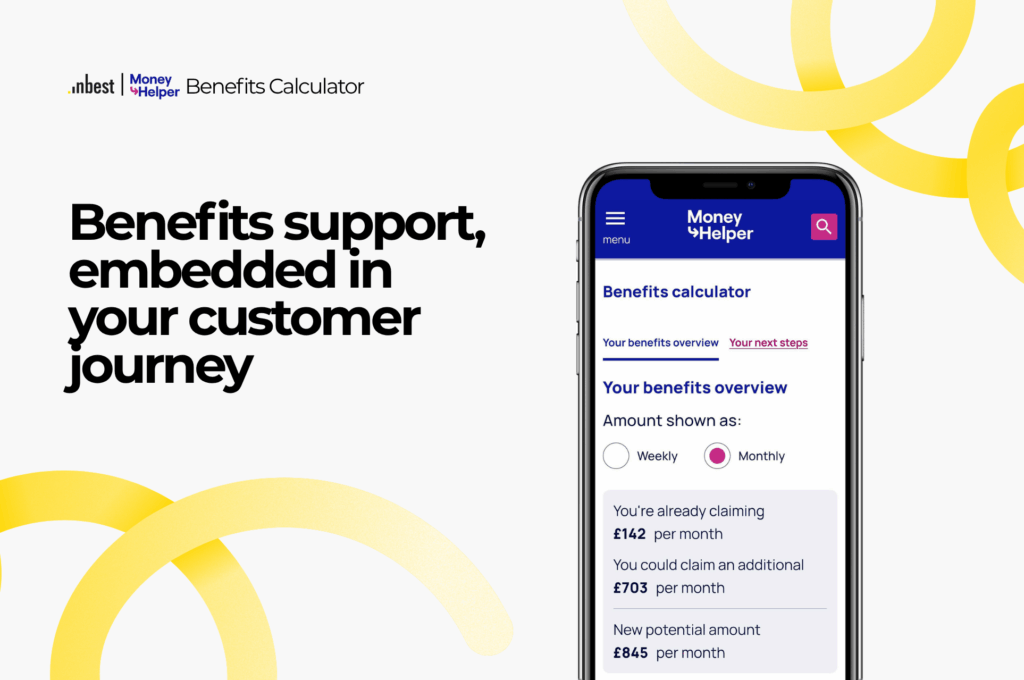
Our Benefits Calculator is embedded in the products and services people use in their day-to-day lives: their banking and lending apps, their energy and water accounts, debt advice services and council websites. Being part of those services means we can reach people when they are already dealing with their money, check their entitlement somewhere they already trust, and stay with them until they claim. That happens in three connected steps, each answering one of the barriers above.

1. Identifying the people who are missing out

People who are missing out on support often show it at moments when they are already dealing with their money: applying for a loan or being turned down for one, telling their bank they are struggling, working through a budget with a debt adviser, asking their energy or water company for help, or applying to the council for a hardship grant. We put the benefits check at those points in the journey, so the people most likely to be eligible see it when it matters to them, without having to look for a calculator on their own.

Councils can go further. Resident Insights uses the Housing Benefit and Council Tax Reduction caseload the council already holds to find the households most likely to be missing other support, such as Pension Credit. The council can then run a targeted take-up campaign instead of relying on general publicity.

2. Showing people how much they can get

Embedded in banking, lending, money management apps and council websites, the calculator takes 5 to 10 minutes and shows, in plain language, the benefits, grants and social tariffs a household can claim, what each is worth and how to apply. Because the check comes from their own bank or lender, in an app they already trust, it takes away the stigma of looking for benefits. We want checking entitlement to feel as ordinary as checking a bank balance.

3. Reminding people until they claim

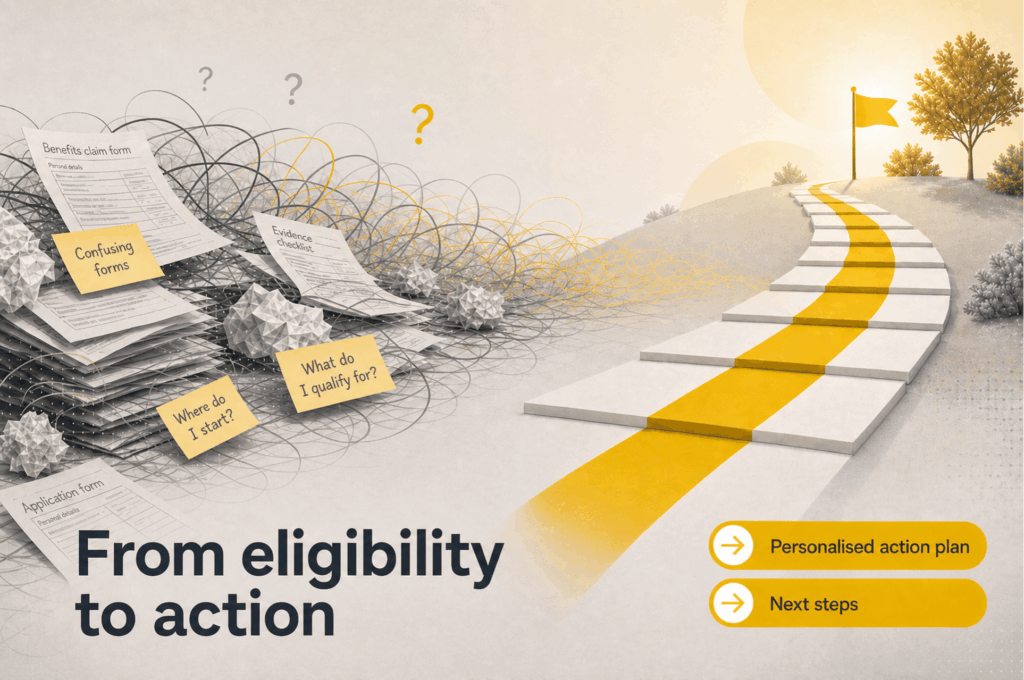
Each person gets a personalised action plan with the next step for every benefit: where to apply, the information to gather and the steps to take, in order. People who opt in get reminders that bring them back to their results and prompt them to apply, one benefit at a time, so a daunting task becomes a series of manageable ones. Because the calculator sits inside the organisation’s own service, the reminders come from an organisation the customer already knows.

Why it matters to the organisations we work with

Embedding income maximisation in existing customer journeys pays back for the organisation as well as the customer.

  • Banks and lenders: more household income improves affordability and makes loan and credit repayments easier to meet. It also gives firms evidence for the FCA’s Consumer Duty and its guidance on the fair treatment of customers in vulnerable circumstances.
  • Energy and water companies: helping customers claim the support they are owed improves their ability to pay and makes assistance schemes go further, in line with Ofgem’s and Ofwat’s expectations on supporting customers in vulnerable circumstances.
  • Debt advice services: income maximisation belongs at the start of understanding a client’s finances, before a repayment plan is agreed.
  • Councils: helping residents claim the national benefits they are entitled to prevents hardship before it starts, so fewer households reach crisis support, homelessness services or arrears. It also means local hardship funds go further, reaching households once the national support available to them is in place.

Work with us

We work with banks, lenders, debt advice organisations, utilities and councils to embed the benefits check in the journeys their customers already use, from finding the people missing out to reminding them until they claim.

If your customers or residents could be among the families missing out, get in touch to explore how we can work together to help them access the national benefits, local support and discounts they are eligible for.